BoJ Holds Rates at 1%, Bitcoin Carry Trade Risk Rises
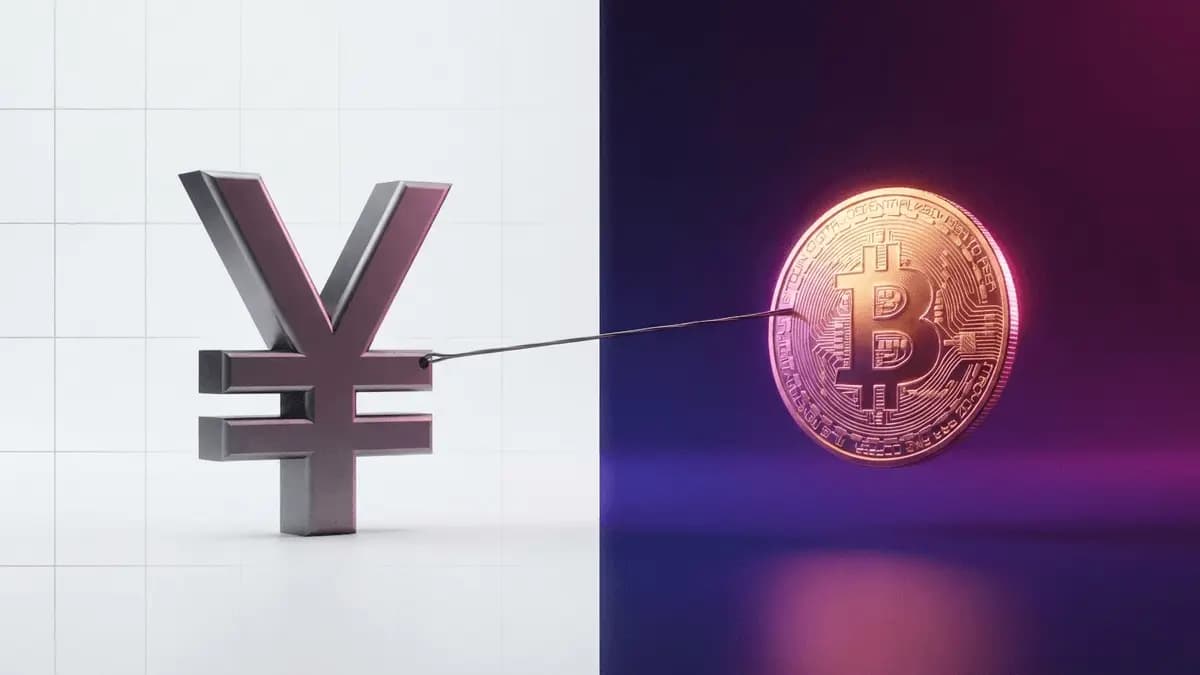
The Bank of Japan (BoJ) has announced its decision to maintain the benchmark interest rate at 1%, a move that follows a period of brief yen intervention in foreign exchange markets. This policy stance, while aimed at domestic stability, is intensifying concerns over the growing risk of an unwind in Bitcoin carry trades, potentially impacting the broader cryptocurrency market.
BoJ Maintains 1% Rate Amid Fading Yen Intervention
Tokyo, Japan – The Bank of Japan (BoJ) today confirmed its commitment to an accommodative monetary policy, holding its key interest rate steady at 1%. This decision comes on the heels of recent, albeit brief, interventions in the foreign exchange market to support the yen, which saw a temporary stabilization in the USD/JPY pair before intervention efforts seemingly faded. While the BoJ's primary focus remains on fostering sustainable inflation and economic growth within Japan, the global financial community is increasingly scrutinizing the ripple effects of this policy, particularly on high-beta assets like Bitcoin.
The 1% interest rate, while a significant step up from the negative rates seen in prior years, still presents a substantial interest rate differential when compared to major global economies. This differential is the foundational element fueling the prevalent 'yen carry trade' strategy. In this scenario, investors borrow yen at the low 1% rate and then convert these funds into other currencies to invest in higher-yielding assets across the globe. For years, traditional assets like government bonds in economies with higher rates have been the primary targets. However, in the dynamic financial landscape of 2026, the allure of digital assets like Bitcoin for their potentially outsized returns has drawn significant capital into crypto-focused carry trades.
Bitcoin's Growing Exposure to Carry Trade Dynamics
Bitcoin, with its characteristic volatility and potential for rapid appreciation, has become an increasingly attractive vehicle for sophisticated investors engaging in carry trades. The strategy amplifies potential gains: if Bitcoin performs strongly, the profits, after converting back to yen and repaying the low-interest loan, can be substantial. This mechanism has been a quiet but persistent source of demand for Bitcoin, especially from institutions and high-net-worth individuals seeking to leverage global interest rate disparities.
The BoJ's decision to hold rates at 1% effectively reinforces the conditions that make these carry trades profitable. A stable or even weakening yen, coupled with the low borrowing cost, encourages continued borrowing in yen to fund investments in assets perceived as having higher growth potential. This sustained flow of capital contributes to Bitcoin's liquidity and can exert upward price pressure, albeit indirectly. However, the very nature of carry trades introduces a significant systemic risk to the digital asset market.
The Looming Threat of a Carry Trade Unwind
The primary concern for crypto analysts and market participants is the potential for a sudden 'unwind' of these carry trades. An unwind typically occurs under specific market conditions:
- Increased Market Volatility: A sharp increase in global market volatility or a significant downturn in risk appetite can prompt investors to de-risk.
- Yen Strengthening: An unexpected strengthening of the yen, perhaps due to a shift in BoJ policy expectations (even if not an immediate rate hike, but a signal of future tightening), or a global flight to safety that favors the yen, would erode the profitability of the trade.
- Decline in Target Asset Value: A significant drop in Bitcoin's price would trigger margin calls or simply make the trade unprofitable, forcing liquidation.
When an unwind begins, investors rapidly sell their higher-yielding assets, including Bitcoin, to convert funds back into yen and repay their loans. This sudden selling pressure can cascade through the market, leading to amplified price corrections and increased volatility. For an asset like Bitcoin, which has demonstrated sensitivity to global liquidity shifts, a large-scale carry trade unwind could trigger a significant downturn, particularly if institutional leverage is substantial.
Implications for the Broader Crypto Market in 2026
In 2026, the interconnectedness of traditional finance and the crypto ecosystem is more pronounced than ever. The BoJ's monetary policy, while seemingly confined to Japan, sends ripples across global asset classes. The continued cultivation of carry trade opportunities through a 1% interest rate means that Bitcoin and other cryptocurrencies remain exposed to the whims of global macro liquidity. Traders and investors are now tasked with carefully monitoring not only Bitcoin's on-chain metrics and adoption trends but also the subtle shifts in central bank policies worldwide, especially those from economies like Japan that have historically provided cheap funding for global risk-taking. The BoJ's current stance, while maintaining stability for Japan, undeniably amplifies the 'tail risk' for Bitcoin, requiring heightened vigilance from market participants.

Devon has tracked blockchain ecosystems, tokenomics, DeFi protocols, and macroeconomic market movements since 2017, focusing on data-driven market intelligence.
Related Stories in Crypto

Binance Revenue Threat Puts HYPE Buybacks Under Pressure
Hyperliquid’s HYPE token has reached all-time highs after sustained buybacks, but Alice Liu of CoinMarketCap warns that Binance could threaten the revenue stream funding those purchases.

Schwab Lists XRP ETFs as Collateral in Repo Market
Charles Schwab has listed XRP exchange-traded funds as eligible collateral in its Wall Street repo market, a development that could broaden institutional access to XRP-related products as the token trades near $1.32.

Quantum-Safe Blockchains May Depend on Math, Not Machines
Blockchain systems may not need quantum computers to become resistant to quantum threats, according to an argument from Optimum co-founder and MIT professor Muriel Médard, who says established mathematics already provides the foundation for quantum-safe design.