PSG's European Dynasty Faces Its Defining Test

Paris St-Germain are pursuing a third successive Champions League title in 2026-27, raising a broader question over whether their recent supremacy belongs among Europe’s greatest club dynasties.
A new benchmark for Paris St-Germain
Paris St-Germain’s pursuit of a third successive Champions League crown has moved the club into a different conversation. The French champions are no longer being judged only on whether they can finally conquer Europe; they are being measured against the continent’s most dominant teams and the dynasties that defined entire eras of club football.
Winning one Champions League title can represent a breakthrough. Retaining it demonstrates resilience and quality. A third consecutive triumph, however, would place PSG in an exceptionally rare group, where success is assessed not simply by trophies but by sustained control of the competition’s defining moments.
Why three titles would matter
European football has produced several outstanding dynasties, but very few clubs have managed to win the continent’s premier competition three times in a row. Real Madrid’s five successive European Cups from 1956 to 1960 remain the clearest example of prolonged supremacy. Ajax followed with three consecutive European Cups between 1971 and 1973, while Bayern Munich matched that achievement from 1974 to 1976.
Those teams were more than serial winners. They shaped how the game was played and established a level of authority that their rivals struggled to challenge. Their achievements were built across multiple seasons, with a distinctive style, elite players and a competitive structure that allowed a dominant side to remain at the summit.
PSG’s potential achievement would therefore be judged against more than a list of winners. It would need to be considered alongside the sustained European influence of clubs such as Liverpool, AC Milan, Barcelona and Real Madrid, whose greatest periods combined continental success with a broader cultural and tactical impact.
PSG’s place in the debate
For much of their modern history, PSG were associated with ambition rather than European authority. Significant investment transformed the club domestically, but success in the Champions League proved far more difficult to secure. Their progress was often measured by how close they came to the title rather than by the trophy itself.
That context makes the current run especially significant. Consecutive Champions League victories would represent a fundamental change in PSG’s status. The club would no longer be described primarily as a wealthy challenger seeking validation; it would be defending a position at the top of European football.
There is also a distinction between a powerful squad and a genuine dynasty. A dynasty requires continuity, an ability to absorb departures and injuries, and the capacity to overcome opponents who have spent an entire season preparing to end the run. PSG’s third successive campaign will test whether their rise reflects a lasting footballing structure or an exceptional period that depends on a particular group of players and circumstances.
The standards set by Europe’s greatest clubs
The strongest historical comparisons also underline the scale of the challenge. Real Madrid’s European record combines repeated triumphs across different generations, while Bayern’s dominance in the 1970s was tied to a team that supplied the backbone of a World Cup-winning West Germany side. Ajax’s early-1970s team had an influence that extended beyond results, helping to popularise a tactical philosophy that changed the sport.
Barcelona’s most celebrated era similarly combined Champions League success with a recognisable identity and a sustained domestic advantage. AC Milan and Liverpool built their reputations through repeated European campaigns in which their authority was reinforced over time.
PSG do not need to copy those teams to merit recognition. Their case will rest on whether the current sequence can be extended and whether the club can develop a legacy that survives beyond the immediate winning cycle. A third title would strengthen the argument, but it would not settle every comparison with clubs whose dominance lasted for a decade or more.
A defining 2026-27 campaign
The 2026-27 Champions League campaign therefore carries significance beyond PSG’s next trophy. It is a test of endurance, expectation and historical standing. Every opponent will approach the holders with the additional motivation that comes from ending a record-setting run, while PSG will face the pressure of defending an achievement that has already altered perceptions of the club.
Should they complete the hat-trick, PSG would have an undeniable claim to belong in the discussion. Whether they rank above Europe’s established dynasties would remain a matter of era, criteria and interpretation, but the question itself would mark a decisive shift. Paris St-Germain would have moved from aspiring superpower to one of the central forces in Champions League history.

Liam covers international football, Premier League tactical analysis, cricket tournaments, and athletic wellness trends with a data-centric perspective.
Related Stories in Football

Where Estevao Can Fit Into Chelsea’s Star-Studded Attack
Estevao Willian’s eye-catching cameo against Arsenal has underlined the attacking options available to Chelsea and raised fresh questions about how the Brazil forward will be used this season.

Villa's Three-Goal Outburst Secures Crucial Brugge Win
Aston Villa demonstrated a significant shift in their attacking fortunes, netting three crucial goals against Club Brugge in a hard-fought encounter, a performance that signals a potential turning point for their season after a period of goal-scoring struggles.
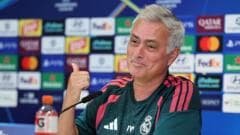
Mourinho's Real Madrid CL Return vs. Inter Kicks Off
Jose Mourinho embarks on his highly anticipated second tenure as Real Madrid manager, with his opening Champions League fixture pitting him against former club Inter Milan, a poignant encounter exactly 16 years after he led the Italian giants to European glory at the very stadium where he now seeks to replicate that success for Los Blancos. The football world watches to see if 'The Special One' can finally deliver the elusive Champions League trophy to the Spanish capital.