ALERT: Geopolitical Tensions Ignite Across Asia and Middle East
Introduction: A Web of Escalating Global Conflicts
As of April 2026, the world is witnessing a dangerous convergence of geopolitical tensions that threaten to reshape international alliances and spark broader military confrontations. From voter disenfranchisement in India's Bengal to grassroots support for Iran in Kashmir, and from U.S. operations in the Eastern Pacific to Israeli actions in Lebanon, these developments underscore a pattern of strategic maneuvers amid ongoing wars and regional instability. This dispatch analyzes the military and geopolitical ramifications, drawing from verified reports to highlight the potential for wider escalations.
Controversy in India's Bengal: A Strategic Blow to Democratic Stability
In eastern India, the upcoming polls in Bengal are marred by a controversial voter list revision that has stripped millions of their rights, with allegations pointing to a targeted exclusion of Muslims. This move, as reported, has ignited fury and could exacerbate internal divisions, potentially destabilizing the region. Strategically, such actions risk inflaming separatist sentiments and drawing in neighboring countries, especially as India's internal policies intersect with broader South Asian dynamics. The exclusionary tactics may not only undermine democratic norms but also provide fodder for extremist groups, heightening the risk of localized conflicts that could spill over borders.
Experts warn that this development aligns with a pattern of polarization, where electoral strategies double as tools for social control. In the context of 2026's global landscape, this could strain India's relations with Muslim-majority nations, complicating efforts to counterbalance China's influence in the Indo-Pacific. The strategic implications extend to military posturing, as internal unrest might divert resources from border defenses, making India more vulnerable to external threats.
Kashmiris Rally for Iran: Reviving Historical Ties Amid Middle East Warfare
Parallel to these events, in the disputed region of Kashmir, a wave of solidarity with Iran has emerged, with residents donating gold and personal savings in response to ongoing conflicts. This resurgence of a centuries-old bond highlights how historical grievances are being leveraged in contemporary warfare, potentially drawing India and Pakistan into Middle Eastern entanglements. As Iran faces external pressures, this grassroots movement could signal shifting alliances, with Kashmir serving as a flashpoint for proxy influences.
From a geopolitical standpoint, this support underscores the interconnectedness of regional conflicts. It raises concerns about Iran's ability to mobilize diaspora networks, which might complicate U.S. and Israeli efforts to isolate Tehran. For India, managing Kashmir's sentiments becomes crucial, as any escalation could lead to cross-border skirmishes with Pakistan, already a nuclear-armed state. Strategically, this development illustrates how economic and cultural ties can fuel military tensions, potentially expanding the scope of Middle East wars into South Asia and prompting international actors to reassess their defense postures.
U.S. Military Strikes in the Eastern Pacific: Escalating Unlawful Operations
Shifting focus to the Pacific, the U.S. military's recent strike on a boat in the Eastern Pacific, resulting in three deaths, marks another escalation in what rights groups describe as a series of unlawful actions. This incident, part of a broader pattern of operations, raises questions about international law and U.S. strategic priorities in maintaining dominance in key maritime routes. The strike could provoke retaliatory measures from affected parties, heightening tensions in an already volatile region.
Geopolitically, this action underscores the U.S.'s commitment to countering illicit activities, but it also risks alienating allies and fueling anti-Western sentiments. In the context of 2026, amid ongoing global rivalries, such operations might strain U.S. relations with Latin American nations or even China, which has interests in the Pacific. The strategic implications include potential disruptions to trade routes and an increased need for naval deployments, which could divert resources from other theaters like the Middle East or Indo-Pacific, thereby creating opportunities for adversaries to exploit.
Israeli Demolitions in Lebanon: A Pattern of Escalation in the Levant
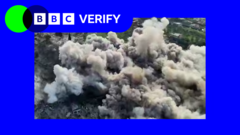
Meanwhile, in southern Lebanon, satellite imagery analysis reveals that Israeli forces have demolished over 1,400 buildings since early March, leveling entire towns and escalating the longstanding conflict. This destruction, verified through independent sources, represents a significant military operation that could lead to further confrontations with Hezbollah and other groups, drawing in regional powers like Iran.
Strategically, these demolitions serve as a deterrent against perceived threats but risk broadening the conflict into a full-scale war. For Israel, this approach reinforces border security amid ongoing tensions, yet it may provoke international condemnation and complicate peace efforts. In the broader 2026 context, this escalation could strain alliances, particularly with the U.S., and encourage Iranian-backed responses, potentially linking it to the support seen in Kashmir. The implications for global stability are profound, as such actions could trigger a cascade of retaliations, affecting energy supplies and migration patterns across the Middle East.
Conclusion: Navigating a Powder Keg of Global Instability
As these events unfold, the interconnected nature of these conflicts paints a picture of a world on the brink, where domestic policies and military actions intersect to create strategic vulnerabilities. From India's internal divisions to Iran's rallying cries and U.S.-led operations, the potential for escalation demands vigilant international diplomacy. Stakeholders must address these tensions to prevent localized disputes from evolving into global confrontations, underscoring the need for robust defense strategies and multilateral engagement in 2026.
This article is based on factual reporting from:
www.aljazeera.com — Original Report ↗www.aljazeera.com — Original Report ↗www.aljazeera.com — Original Report ↗www.bbc.com — Original Report ↗