Bitcoin Falls as U.S.-Iran Talks Fail, Market Faces Pressure
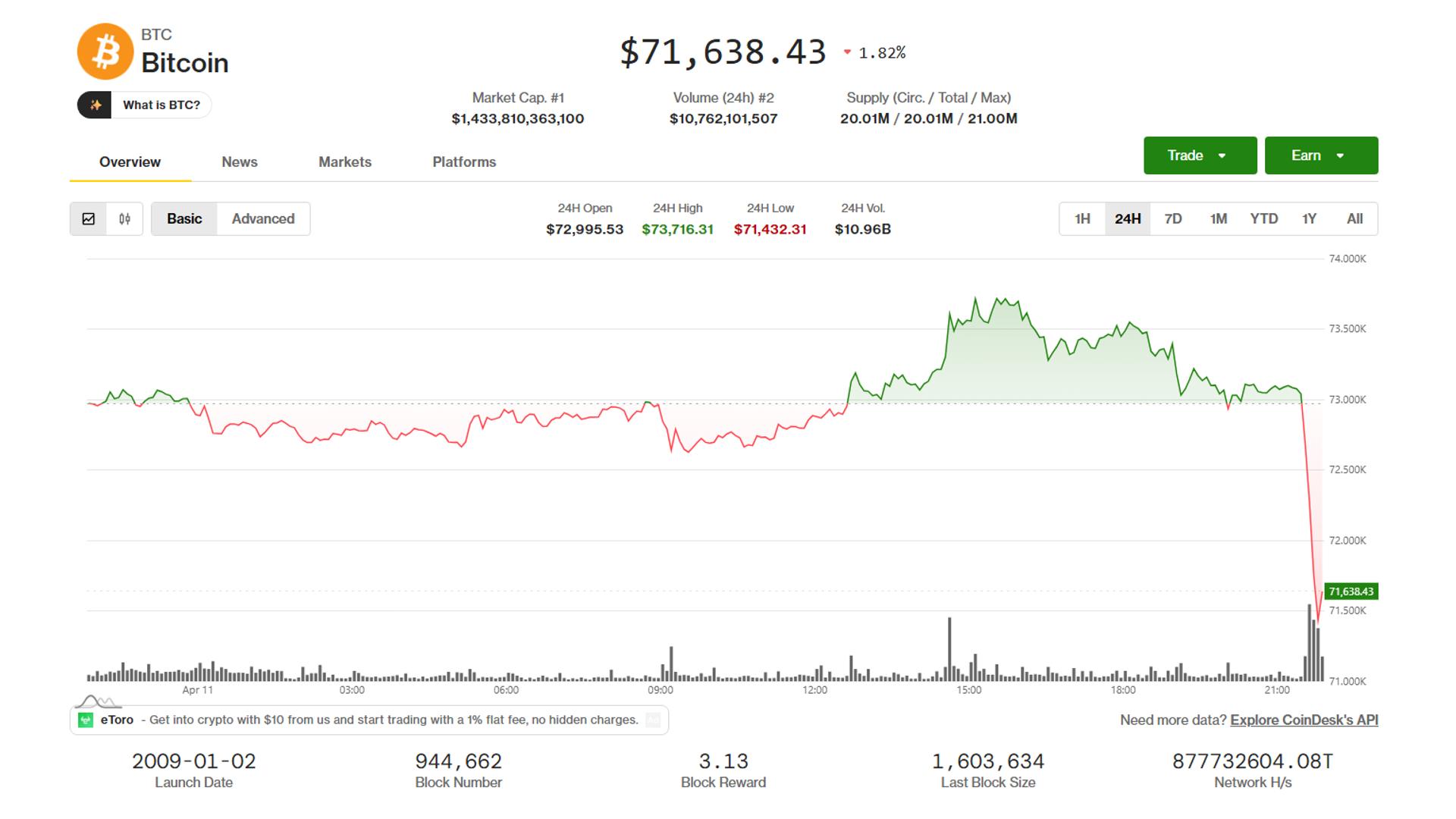
Bitcoin and Crypto Markets Slide Amid Geopolitical Tensions and Economic Challenges
The cryptocurrency market is facing a turbulent week as geopolitical tensions and economic headwinds weigh heavily on prices and investor sentiment. Bitcoin and other major cryptocurrencies declined between 1.5% and 2% following the breakdown of negotiations between U.S. and Iranian officials, according to a recent report from CoinDesk. This drop comes alongside broader market challenges, including warnings of a profit squeeze for crypto platforms and a significant deal collapse in the Ethereum space.
Geopolitical Fallout Impacts Crypto Prices
The failure of U.S.-Iranian talks in Pakistan has sent ripples through financial markets, including cryptocurrencies. U.S. Vice President J.D. Vance announced the end of a daylong negotiation session, signaling no immediate resolution to ongoing tensions. As risk assets, cryptocurrencies often react negatively to geopolitical uncertainty, and this event proved no exception, with Bitcoin and other digital assets shedding value in the aftermath. This decline reflects the market's sensitivity to global events, as investors seek safer havens during periods of instability.
Market Indicators Show Mixed Signals
Amid the price drop, on-chain data offers a glimmer of hope for Bitcoin investors. According to CoinDesk, realized losses for Bitcoin holders have declined, signaling potential seller exhaustion. This trend, coupled with spot markets shifting toward net buying, suggests that selling pressure may be easing. While this does not guarantee an immediate recovery, it indicates that the market could be nearing a bottom as fewer investors are willing to sell at a loss. However, broader economic challenges continue to loom large over the industry.
Profit Squeeze and Deal Collapse Add to Woes
The crypto industry is bracing for a tough first quarter, with several major investment firms downgrading platforms like Coinbase due to declining trading activity and falling token prices. CoinDesk reports that analysts are warning of a significant profit squeeze, as the so-called 'crypto honeymoon' appears to be over for now. This comes as trading volumes drop sharply, threatening earnings for exchanges and other market participants. Additionally, a high-profile $1.6 billion SPAC deal involving Ether Machine, an ether treasury firm with over $1 billion in ETH holdings, has collapsed due to unfavorable market conditions. This failure underscores the challenging environment for crypto-related businesses seeking to raise capital or expand operations.
Corporate Holdings Highlight Resilience
Despite market turbulence, some corporate players remain steadfast in their crypto commitments. SpaceX, led by Elon Musk, holds $603 million worth of Bitcoin, equivalent to 8,285 BTC, in Coinbase Prime custody, as per data from Arkham. This holding persists even as the company grapples with a dramatic swing from an $8 billion profit to a nearly $5 billion loss, largely attributed to challenges with its xAI division ahead of an IPO push, according to CoinDesk. SpaceX’s significant Bitcoin position highlights the growing intersection of traditional business and cryptocurrency, even as economic pressures test corporate balance sheets.
Looking Ahead: Uncertainty Dominates the Crypto Landscape
The cryptocurrency market finds itself at a crossroads, with geopolitical tensions, declining trading activity, and corporate challenges creating a perfect storm of uncertainty. While on-chain data suggests that selling pressure may be waning for Bitcoin, the broader industry faces significant hurdles, from profit warnings to failed deals like that of Ether Machine. Investors are likely to remain cautious in the near term, closely monitoring global events and market indicators for signs of stabilization.
As the first quarter approaches, the crypto sector must navigate these headwinds while proving its resilience. Whether the market can rebound from current lows remains to be seen, but the interplay of geopolitical risks and economic factors will undoubtedly shape the path forward. For now, stakeholders are left to assess the impact of failed negotiations, corporate holdings, and shifting market dynamics in an increasingly complex landscape.
This article is based on factual reporting from:
www.coindesk.com — Original Report ↗www.coindesk.com — Original Report ↗www.coindesk.com — Original Report ↗www.coindesk.com — Original Report ↗www.coindesk.com — Original Report ↗