Ex-Epic Artist Shares Gaussian Splatting Rendering Insights
Introduction to Gaussian Splatting
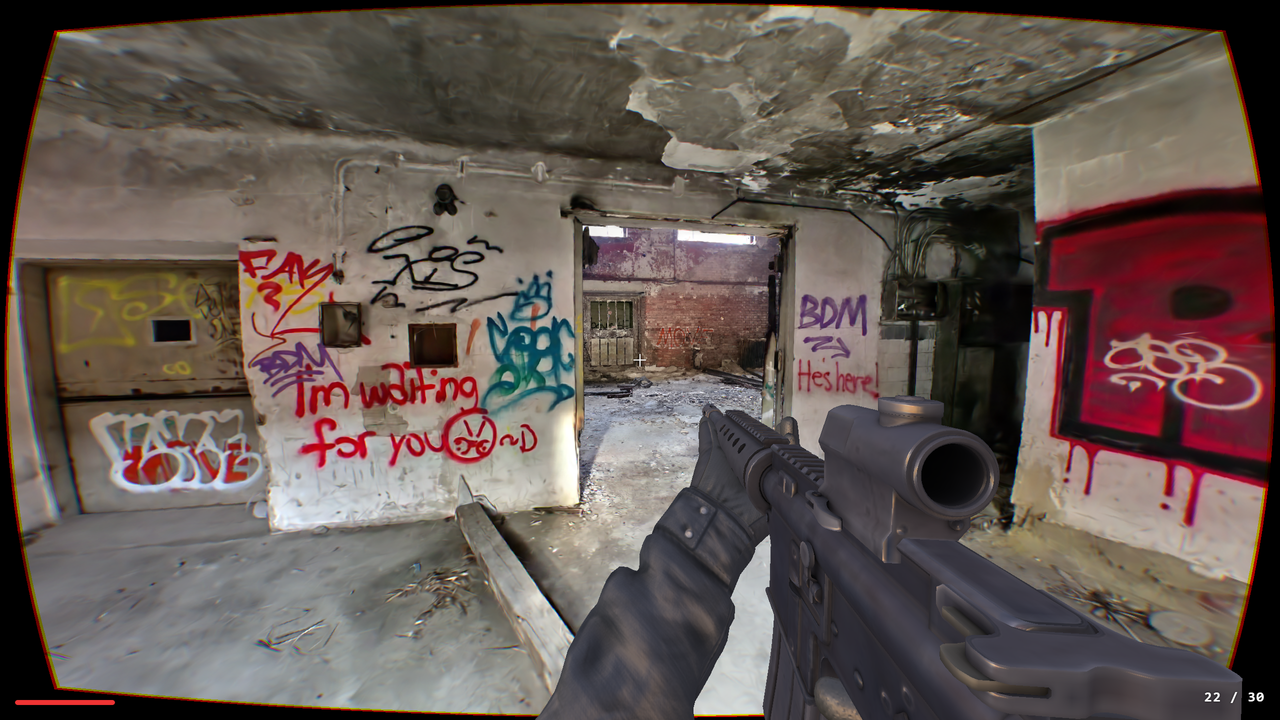
In the ever-evolving landscape of game development and real-time rendering, Gaussian Splatting has emerged as a groundbreaking technique that promises to deliver photo-realistic visuals at a fraction of the traditional computational cost. This method, which leverages mathematical models to approximate light scattering, was the focus of a detailed interview with a former Epic Games artist, as reported in a recent PC Gamer article. The discussion delves into how this technique not only enhances visual fidelity but also streamlines the entire production process for developers in 2026.
Technical Breakdown of Gaussian Splatting
At its core, Gaussian Splatting is a rendering approach that uses Gaussian functions to represent and render complex scenes. Unlike traditional rasterization or ray tracing methods, which can be computationally intensive, Gaussian Splatting approximates the distribution of light and surfaces using probabilistic models. This allows for real-time rendering of highly detailed environments with reduced hardware demands. The ex-Epic artist explained that the technique involves splatting Gaussian blobs—essentially, overlapping Gaussian distributions—to simulate the way light interacts with objects, resulting in visuals that closely mimic real-world photography.
One key advantage highlighted in the interview is the efficiency in the capture-to-delivery pipeline. Traditionally, achieving photo-realism requires extensive polygon modeling, texturing, and lighting setups, which are time-consuming and resource-heavy. Gaussian Splatting, however, integrates seamlessly with modern capture technologies like LiDAR or photogrammetry, allowing artists to convert real-world scans directly into renderable assets. The artist noted that this method reduces the need for manual adjustments, potentially cutting development time by up to 50% for certain assets in AAA titles.
Implications for the Gaming Industry in 2026
As the gaming sector continues to push boundaries with increasingly immersive experiences, techniques like Gaussian Splatting could become standard in upcoming AAA releases. The interview revealed that this approach is particularly beneficial for open-world games and simulations, where vast, detailed environments are crucial. For instance, it could enable more realistic weather effects, character animations, and dynamic lighting without the performance hits seen in current engines like Unreal or Unity. In 2026, with hardware advancements such as next-generation GPUs, Gaussian Splatting might democratize high-fidelity graphics, making them accessible to mid-tier devices and indie developers.
The ex-Epic artist emphasized that Gaussian Splatting isn't just a rendering trick; it's a paradigm shift that affects workflow from concept to final product. This could lead to faster iteration cycles in game development, allowing studios to prototype and refine visuals more rapidly. However, challenges remain, such as ensuring accuracy in edge cases like translucent materials or extreme lighting conditions, which the artist discussed in depth. These insights suggest that while the technique is promising, ongoing refinements will be necessary to integrate it fully into mainstream engines.
Context and Future Applications
- Efficiency Gains: By minimizing the computational overhead, Gaussian Splatting could extend battery life in mobile gaming and enable smoother experiences in VR environments.
- Industry Adoption: Major players like Epic Games or Unity Technologies might incorporate this into their toolsets, influencing how future titles like potential sequels to popular franchises are developed.
- Broader Implications: Beyond gaming, this technique has applications in fields like virtual reality training and architectural visualization, but its relevance to game reveals lies in enhancing next-gen graphics capabilities.
In the context of 2026's tech landscape, where players demand ever-more realistic worlds, Gaussian Splatting represents a low-cost pathway to innovation. The interview provides a rare, expert perspective on its practicalities, underscoring the technique's potential to redefine standards in visual fidelity. As developers experiment with this method, it could pave the way for more accessible and advanced game experiences. This detailed exploration highlights the ongoing evolution of rendering technologies and their role in shaping the future of interactive entertainment.