FF14 Player Recreates Pragmata in In-Game Housing
The Innovative Use of Furniture Slots in Final Fantasy 14
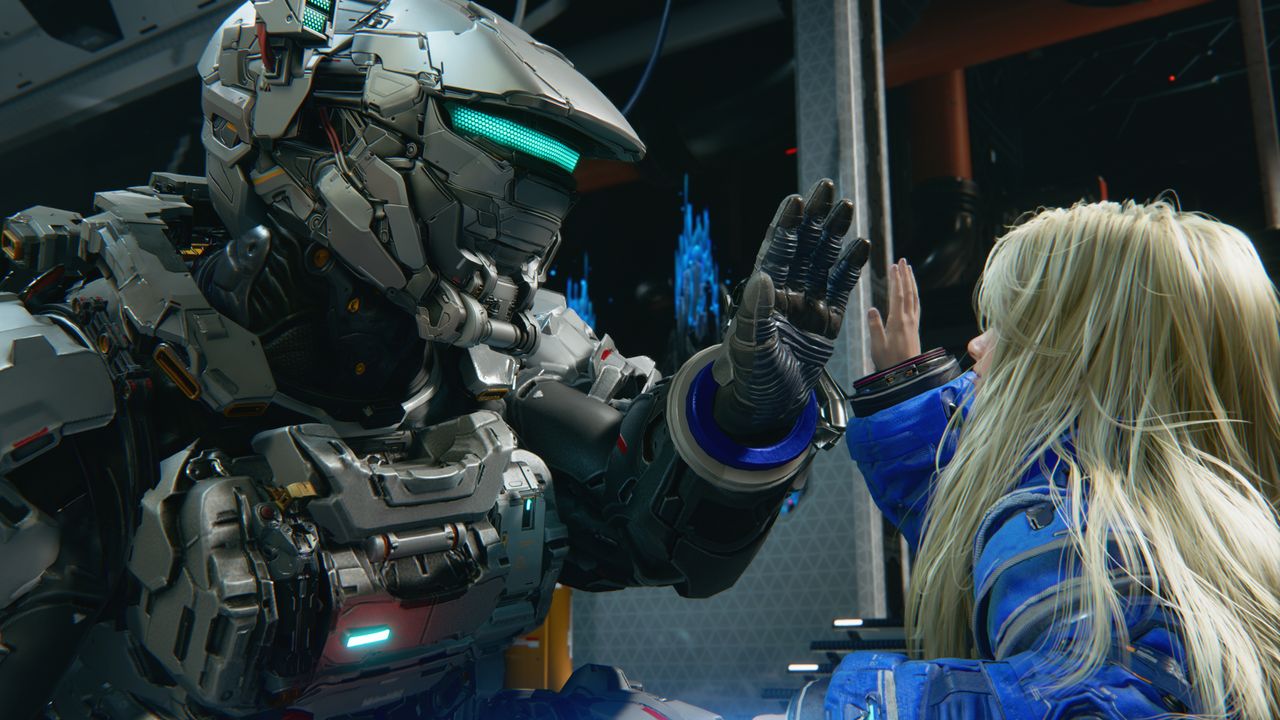
In the ever-evolving world of online gaming, players continue to push the boundaries of in-game mechanics, as demonstrated by a recent creation in Final Fantasy 14. A player has masterfully employed the game's furniture slot system to transform their virtual house into a striking replica of scenes from Capcom's upcoming title, Pragmata. This achievement highlights the technical depth embedded in MMORPG housing features, particularly with the increased placement limits introduced in recent updates.
Final Fantasy 14, developed by Square Enix, offers players a robust housing system where they can design and decorate personal residences using a variety of furniture items. The furniture slot mechanism allows for the placement of objects within defined spatial parameters, governed by algorithms that manage object collisions, scaling, and environmental interactions. In this case, the player leveraged these slots to meticulously recreate Pragmata's futuristic, dystopian environments, drawing from leaked concept art and official trailers. Pragmata, announced as a AAA title by Capcom, features advanced graphics and narrative elements that have captured the imagination of the gaming community, making this recreation a technical feat of adaptation.
To achieve this, the player navigated the complexities of FF14's housing editor, which includes limits on item placements to prevent server overload and ensure smooth performance. The increased placement limit, a key update in the game's patches, expands the maximum number of furniture items from previous caps, allowing for more intricate designs. This technical enhancement involves backend optimizations in the game's engine, likely including improved memory allocation and rendering efficiency, which enable players to experiment without compromising gameplay stability. The player's approach involved strategic layering of items, precise positioning to mimic Pragmata's architectural styles, and creative use of lighting effects, all while adhering to the game's physics engine constraints.
This recreation not only demonstrates player ingenuity but also underscores the broader implications for game design and community engagement. In 2026, as MMORPGs like FF14 continue to update their systems, such user-generated content serves as a testament to the platform's flexibility. For instance, the furniture slot system relies on a grid-based placement model, where each slot corresponds to a virtual coordinate in the game world. Players must calculate angles, scales, and overlaps to avoid glitches, such as items phasing through walls or causing performance lags. This level of detail requires a deep understanding of the game's underlying code, including how assets are loaded and rendered in real-time.
Technical Breakdown and Community Impact
Diving deeper, the player's work involved overcoming specific technical challenges inherent to FF14's housing system. Furniture items in FF14 are categorized by type, size, and interaction potential, with each item occupying a set number of slots based on its polygonal complexity. By optimizing item selection—choosing lower-poly models for background elements and higher-detail ones for focal points—the player maximized their available slots without exceeding the game's limits. This mirrors real-world programming practices, where resource management is crucial for maintaining frame rates and server responsiveness.
From a contextual perspective, this creation intersects with ongoing discussions in the gaming industry about player-driven content and its role in extending game longevity. While not directly tied to e-sports or cybersecurity, it reflects how technical features can foster community innovation, potentially influencing future updates. For example, Square Enix might analyze such player behaviors to refine their anti-cheat measures or enhance housing tools, ensuring that creative expressions do not introduce vulnerabilities. In 2026, with increasing focus on digital security, games like FF14 must balance open-ended features with robust protections against exploits.
The Pragmata recreation also draws parallels to new game reveals, as it adapts elements from Capcom's project, which has been teased through various media. This player initiative could inspire official crossovers or modding communities, highlighting how fan creations bridge gaps between titles. Technically, the process involved trial and error with the game's user interface, which uses a combination of drag-and-drop mechanics and precise coordinate inputs. Players reported in community forums that achieving symmetry and scale required multiple iterations, underscoring the educational value of these features for aspiring game designers.
- Key technical aspects: Furniture slot limits and optimizations.
- Implications for players: Enhanced creativity and community sharing.
- Broader context: How in-game tools evolve with game updates in 2026.
In conclusion, this player's recreation of Pragmata in Final Fantasy 14 exemplifies the sophisticated interplay between game mechanics and user creativity, pushing the envelope of what's possible within digital worlds. As the industry advances, such endeavors remind us of the technical foundations that make immersive experiences thrive.