FIFA Reaffirms Iran's Participation in 2026 World Cup
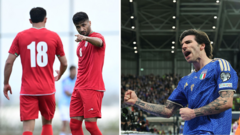
The Latest on FIFA's Stance Amid World Cup Speculation
In the lead-up to the 2026 World Cup, FIFA has categorically rejected proposals for swapping Iran with Italy, emphasizing the organization's commitment to established qualification processes. This development comes after comments from FIFA President Gianni Infantino, who last week confirmed Iran's inclusion in the tournament. The rejection highlights ongoing tensions in international football governance, particularly as global politics intersect with sports.
The story began with a suggestion from a Trump envoy, reportedly advocating for an Iran-Italy swap, which stirred controversy among football stakeholders. This proposal, though not detailed in official channels, appears to stem from broader geopolitical discussions, possibly linked to diplomatic relations between the United States and Iran. FIFA's swift response underscores the governing body's dedication to maintaining the integrity of the World Cup qualification system, which is based on merit and regional confederation results.
Infantino's original statement, made during a press conference, was straightforward: "The Iranian team is coming, for sure." This affirmation was in response to inquiries about potential disruptions to the lineup for the 2026 edition, which will be co-hosted by the United States, Canada, and Mexico. The World Cup, scheduled to feature 48 teams for the first time, has already seen intense qualification battles across continents, with Iran's spot secured through their performance in the Asian Football Confederation (AFC) qualifiers.
Breaking Down the Event and Its Context
To understand the implications, it's essential to revisit Iran's path to the 2026 World Cup. The Iranian national team, known as Team Melli, earned their qualification spot by topping their group in the AFC's third round of qualifiers, demonstrating strong form under their coaching staff. This achievement is particularly noteworthy given the challenges faced by Iranian football, including sanctions and travel restrictions that have affected international friendlies and preparations.
The proposed swap, if it had been entertained, would have upended the qualification framework, potentially setting a dangerous precedent for future tournaments. Italy, a four-time World Cup champion, failed to qualify for the 2022 edition and is currently navigating its own path back to the global stage. However, any suggestion to bypass standard procedures raises questions about fairness and the autonomy of sports organizations from political influences.
- Key elements of FIFA's qualification process include regional tournaments and playoffs, ensuring a level playing field.
- The 2026 World Cup's expanded format aims to include more nations, promoting global inclusivity.
- Infantino's comments reinforce FIFA's policy of non-interference in qualified teams' participation.
This incident also reflects the broader context of how geopolitical events can impact sports. The Trump envoy's suggestion might be tied to U.S. foreign policy shifts, especially as the 2026 World Cup will be held partly in the United States. Such intersections have historical parallels, like the boycotts of the 1980 and 1984 Olympics, reminding us that football is not immune to world affairs. FIFA's firm stance serves as a reminder that the organization prioritizes sporting merit over external pressures, safeguarding the tournament's credibility.
Implications for the 2026 World Cup and Beyond
The rejection of the swap proposal has significant implications for the 2026 World Cup's organization and participant dynamics. For Iran, this confirmation allows the team to focus on preparations without the distraction of uncertainty. Under their current coach, who has been instrumental in building a competitive squad, Iran aims to make a deep run, drawing on talents from domestic leagues and the Iranian diaspora in Europe. This stability could enhance their performance, potentially leading to exciting matchups against powerhouses like Brazil or Germany.
On a larger scale, FIFA's decision reinforces the organization's rules against political meddling, which could influence how future host nations handle sensitive issues. As the 2026 tournament expands to 48 teams, maintaining qualification integrity is crucial to avoid perceptions of favoritism. This event might prompt FIFA to review and strengthen its protocols, ensuring that all qualified nations can participate without external threats.
Moreover, the episode highlights the evolving role of football in diplomacy. While sports have often been a bridge between nations, instances like this underscore the challenges when politics intrude. For fans and players alike, the focus remains on the pitch, where Iran's participation promises thrilling moments, such as potential group stage clashes that could captivate a global audience.
Contextualizing Iran's Role in International Football
Iran has a storied history in the World Cup, having qualified for the tournament multiple times since their debut in 1978. Their appearances have often been marked by passionate performances and underdog stories, fostering national pride amidst various challenges. In the context of 2026, this confirmation is a boost for Iranian football, allowing for uninterrupted planning in areas like training camps, player selections, and fan engagements.
As the world looks toward the 2026 World Cup, events like this reaffirm the tournament's status as a unifying global event. FIFA's clear position ensures that the competition proceeds as planned, with all qualified teams ready to compete. This development, while resolving immediate speculation, serves as a testament to the resilience of international sports governance.
In conclusion, FIFA's rejection of the Iran-Italy swap proposal solidifies the path for the 2026 World Cup, emphasizing adherence to qualification standards and the separation of sports from politics. As preparations continue, the focus shifts back to the field, where Iran's presence will undoubtedly add to the tournament's excitement and diversity.