Hungary's New PM Sworn In After Landslide Victory
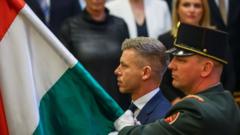
On a crisp spring day in Budapest, Péter Magyar, the leader of the Tisza party, was officially sworn in as Hungary's new prime minister, signaling a dramatic shift in the country's political landscape. This ceremony, held amidst celebrations dubbed a 'regime change' party, underscores the profound impact of the recent national elections, where Magyar's party secured a landslide victory. The event not only represents a peaceful transition of power but also highlights the electorate's desire for change after more than a decade and a half under the previous administration.
The Election That Sparked Change
The path to this moment began with the parliamentary elections held in early April 2026, where Magyar's Tisza party captured an overwhelming majority of seats. Official results showed the party winning approximately 54% of the vote, a stark contrast to the consistent dominance of Viktor Orbán's Fidesz party since 2010. Analysts attribute this shift to growing public discontent over issues such as economic stagnation, corruption allegations, and restrictive policies on media and civil liberties. Magyar, a former insider in Orbán's government who turned critic, positioned his campaign as a fresh alternative, promising reforms in governance, economic revitalization, and stronger ties with the European Union.
During the campaign, Magyar emphasized transparency and anti-corruption measures, resonating with voters weary of Fidesz's long tenure. His victory speech, delivered shortly after the election results were announced, vowed to 'rebuild trust in Hungarian democracy' and address the nation's pressing challenges, including inflation and migration policies. The Tisza party's platform also included commitments to bolster Hungary's role in the EU, potentially easing tensions that had arisen under Orbán's euroskeptic stance.
The Swearing-In Ceremony
The inauguration took place in the historic Hungarian Parliament building, with thousands of supporters gathering outside to witness the event. Magyar, dressed in a traditional dark suit, took the oath of office in the presence of key political figures, including outgoing Prime Minister Orbán, who conceded defeat gracefully. The ceremony featured symbolic elements, such as the national anthem and a moment of silence for Hungary's democratic heritage, emphasizing the gravity of the transition. Attendees described the atmosphere as jubilant yet reflective, with Magyar's speech focusing on unity and national renewal.
Security was tight, given the high-profile nature of the event, with police cordons and media crews from around the world capturing the proceedings. International dignitaries, including representatives from the EU and neighboring countries, were in attendance, signaling global interest in Hungary's political evolution. Magyar's first act as prime minister was to outline immediate priorities, such as forming a new cabinet and initiating policy reviews.
Implications for Hungarian Politics
This regime change could usher in significant policy shifts, particularly in areas where Orbán's government faced criticism. For instance, Magyar has pledged to relax media regulations, which had been accused of stifling free speech, and to pursue more inclusive economic policies aimed at reducing inequality. Experts suggest that these changes might attract foreign investment and improve Hungary's standing within the EU, potentially leading to faster economic growth and better access to EU funds.
However, challenges lie ahead. Orbán's loyal base remains strong, and there could be resistance from Fidesz supporters in parliament and local governments. Political analysts warn that Magyar will need to navigate coalition dynamics carefully, as his party's majority, while substantial, is not absolute. Additionally, external factors such as the ongoing geopolitical tensions in Europe, including relations with Russia and the United States, will test his administration's foreign policy acumen.
Broader Context and International Reactions
Hungary's political realignment occurs against a backdrop of broader European trends, where populist movements have waned in some regions. The EU has expressed optimism about Magyar's leadership, with officials from Brussels noting that it could strengthen democratic norms across the bloc. In contrast, some conservative leaders in Eastern Europe have voiced concerns about potential shifts away from traditional alliances. Domestically, civil society groups are hopeful that the new government will advance human rights and judicial reforms.
As Hungary enters this new era, the world watches closely to see how Magyar's promises translate into action. His administration's early decisions, such as budget allocations and diplomatic engagements, will be crucial in shaping the country's future. This transition not only marks the end of an era but also offers a potential model for democratic renewal in the region.
- Key figures involved: Péter Magyar and Viktor Orbán.
- Major outcomes: Landslide election win and peaceful power transfer.
- Future watchpoints: Policy reforms and international relations.
In conclusion, the swearing-in of Péter Magyar as Hungary's prime minister represents a pivotal moment in the nation's history, promising a departure from the past and a step towards a more open and prosperous future. As he begins his term, the focus will be on delivering tangible changes that address the concerns of the Hungarian people.