Hungary's Political Shift: Orbán's Rule Faces Challenge
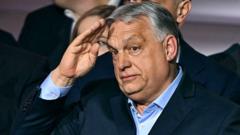
A New Era Dawns in Hungarian Politics
Hungary, a nation long defined by the polarizing leadership of Prime Minister Viktor Orbán, appears to be at a crossroads. In a historic development, Péter Magyar has emerged victorious, signaling a potential end to the tensions that have characterized Orbán's tenure. Reporting from Budapest, the BBC's Nick Thorpe highlights a country weary of division and eager for a reprieve. This shift raises questions about the future of Hungary's domestic policies and its role within the European Union.
The Rise of Péter Magyar
Péter Magyar's win is not just a political upset; it represents a broader desire for change among Hungarians. While specific details of the election results or the nature of Magyar's campaign are not fully outlined in initial reports, his victory is framed as a historic moment. As a figure outside the long-dominant sphere of Orbán's Fidesz party, Magyar offers a fresh perspective, potentially appealing to citizens exhausted by years of political friction. His rise suggests a growing appetite for reconciliation and stability in a nation often at odds with both its own citizens and international partners.
Viktor Orbán's Divisive Legacy
Viktor Orbán, in power since 2010, has been a polarizing figure in European politics. His government has frequently clashed with the European Union over issues such as rule of law, media freedom, and migration policies. Domestically, Orbán's administration has been criticized for centralizing power and curbing democratic institutions, creating a climate of tension that has left many Hungarians fatigued. While Orbán retains a significant base of support, particularly among those who value his nationalist stance and conservative policies, the recent political shift indicates that his once-unshakable grip on power may be loosening.
Implications for Hungary and Beyond
The implications of this political transition extend far beyond Hungary's borders. As a member of the European Union, Hungary has often been a thorn in the side of Brussels, with Orbán's government blocking or challenging EU consensus on various issues. A change in leadership or political direction could pave the way for improved relations with the EU, potentially easing tensions over funding disputes and policy disagreements. Furthermore, Hungary's position as a key player in Central Europe means that any shift in its political landscape could influence regional dynamics, particularly in relation to neighboring countries and broader geopolitical challenges like the ongoing war in Ukraine.
At home, the focus will likely be on whether Magyar can deliver on the promise of peace and unity. Key challenges include:
- Addressing economic concerns amid global inflation and EU funding delays.
- Restoring public trust in democratic institutions after years of perceived erosion.
- Navigating Hungary's complex relationship with both Western allies and eastern neighbors like Russia.
Looking Ahead: A Nation in Transition
As Hungary steps into this uncertain but potentially transformative period, the eyes of Europe and the world are watching. Péter Magyar's victory offers a glimmer of hope for a country seeking respite from the strife of recent years, but the road ahead is fraught with challenges. Can Magyar unite a divided populace and steer Hungary toward a more cooperative stance within the international community? Or will the deep-seated divisions of Orbán's era persist, hampering efforts at reform?
For now, the Hungarian experiment under Viktor Orbán appears to be running out of steam, as reported by the BBC. What comes next remains to be seen, but this historic moment marks a pivotal chapter in Hungary's modern history. As the nation grapples with its identity and future direction, the outcome of this political shift could resonate far beyond Budapest, shaping the trajectory of Central Europe and the broader European Union for years to come.