Key Takeaways from King's Address to Congress
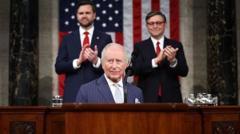
The King's Historic Address: A Detailed Overview
In a landmark event that underscores the enduring alliance between the United Kingdom and the United States, the King delivered a speech to a joint session of Congress, marking a significant moment in transatlantic relations as of 2026. This address, filled with diplomatic nuances and forward-looking statements, provided insights into global challenges and domestic politics, drawing particular attention for its potential impact on US policy directions.
The speech, which took place amid a backdrop of evolving geopolitical tensions, included several key lines that analysts are dissecting for their implications. According to reports, the King emphasized the importance of strengthening democratic institutions and addressing climate change, themes that aligned closely with progressive agendas. These elements were seen as buoying Democrats, who have been advocating for robust international partnerships and environmental reforms in the face of partisan divides.
One of the most notable aspects of the address was its balanced tone, which navigated sensitive topics without alienating key stakeholders. For instance, the King referenced the need for renewed economic ties between the UK and the US, a nod to post-Brexit realities that have shaped global trade dynamics by 2026. This part of the speech raised eyebrows in the White House, as it subtly critiqued protectionist policies that have gained traction in recent years, potentially influencing ongoing trade negotiations.
Breaking Down the Key Takeaways
To provide a clearer understanding, here are the primary takeaways from the King's address, as highlighted in contemporary analyses:
- The King's call for enhanced collaboration on climate initiatives, which Democrats praised as a reinforcement of the Paris Agreement's goals, could pressure the administration to prioritize green energy investments.
- References to historical alliances, such as those forged during World War II, served as a reminder of shared values, but also subtly urged a reevaluation of current foreign policy stances, particularly in regions like the Indo-Pacific.
- Lines addressing social equity and global inequality were interpreted as endorsements of domestic reforms, aligning with Democratic platforms and potentially alienating conservative factions within the White House.
- The speech's emphasis on youth engagement in politics highlighted the need for intergenerational dialogue, a theme that resonates in 2026 amid rising voter participation among younger demographics.
- Finally, the King's remarks on technological innovation and ethical AI development added a layer of modernity, though they stopped short of endorsing specific policies, leaving room for interpretation in US legislative debates.
These takeaways are not just rhetorical; they carry weight in the current political climate. For Democrats, the speech offered validation for their internationalist approach, potentially bolstering their position in upcoming congressional sessions. Conversely, the White House's reaction, as noted in initial briefings, suggested a mix of appreciation and caution, with officials indicating that the address might prompt internal reviews of foreign policy alignments.
Implications for US-UK Relations and Domestic Politics
The implications of this address extend beyond immediate reactions, influencing the broader landscape of US-UK relations in 2026. As the world grapples with economic uncertainties and security threats, such speeches serve as pivotal moments for reaffirming commitments. The King's words could accelerate diplomatic efforts, including potential trade deals or joint initiatives on global issues like migration and cybersecurity.
In the context of US domestic politics, the address arrives at a time when partisan divides are pronounced. Democrats may leverage the King's supportive rhetoric to advance legislation on environmental and social fronts, using it as a counterpoint to Republican priorities. Meanwhile, the White House's raised eyebrows indicate a possible recalibration of strategies, ensuring that US policies remain aligned with national interests while maintaining strong ties with allies.
Historically, royal addresses to Congress are rare and symbolic, with the last one occurring years prior. This event in 2026 reinforces the special relationship between the two nations, even as global dynamics shift. Experts suggest that the speech could lead to increased cultural exchanges and educational partnerships, fostering long-term benefits for both countries.
Context and Lasting Impact
Contextually, the address reflects the evolving role of the British monarchy in international affairs, adapting to a world where soft diplomacy plays a crucial role. By 2026, with technological advancements and geopolitical realignments, such events highlight the monarchy's relevance in promoting stability. The King's choice of words, carefully crafted to appeal to a divided audience, demonstrates the art of diplomacy in action.
The lasting impact of this address may be seen in policy shifts and public discourse. It could inspire bipartisan efforts on shared challenges, reminding policymakers of the value of unity in a fragmented world. As discussions continue, the speech stands as a testament to the enduring bond between the UK and the US, with potential ripple effects on global alliances.
In conclusion, the King's historic address to Congress in 2026 not only highlighted key global issues but also underscored the complexities of modern diplomacy, leaving a mark on both international relations and domestic politics that will be analyzed for years to come.