Malema Sentenced to Five Years in Prison
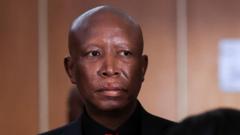
The Sentencing of Julius Malema
In a significant development in South African politics, opposition figure Julius Malema, leader of the Economic Freedom Fighters (EFF), was sentenced to five years in prison on charges that remain central to ongoing legal scrutiny. This ruling, handed down by a South African court, marks a pivotal moment in the nation's judicial landscape as of April 2026. Malema, known for his fiery rhetoric and advocacy for economic transformation, is now navigating the complexities of an appeal process to prevent his incarceration starting on Thursday, April 16, 2026.
The sentence stems from a case that has drawn widespread attention, though specific details of the charges are not fully outlined in the initial reports. Based on the context provided, Malema's legal team is actively challenging the decision, arguing procedural irregularities and seeking to delay or overturn the verdict. This appeal is crucial, as it could determine whether Malema serves time or continues his political activities amid South Africa's evolving democratic challenges.
Background on Julius Malema
Julius Malema has been a prominent and controversial figure in South African politics for over a decade. Rising to prominence as the former president of the African National Congress Youth League (ANCYL), Malema was expelled from the ANC in 2012 due to his outspoken criticism of the party leadership and calls for nationalizing mines and seizing land from white farmers—policies aimed at addressing historical inequalities from apartheid. In 2013, he founded the EFF, which has positioned itself as a radical left-wing alternative, focusing on anti-corruption, economic redistribution, and social justice.
Malema's career has been marked by numerous legal battles, including previous convictions related to hate speech and incitement. His sentencing in 2026 underscores the tensions between political expression and legal accountability in South Africa. As the EFF gained seats in the National Assembly, Malema's influence has grown, making this event a focal point for discussions on freedom of speech and the rule of law in the post-apartheid era.
The Appeal Process and Immediate Implications
Malema is appealing the sentence to prevent his imprisonment on Thursday, highlighting the urgency of the legal proceedings. South African law allows for appeals to higher courts, such as the High Court or the Constitutional Court, where defendants can argue that their rights have been violated. In this case, Malema's team contends that the original trial may have overlooked key evidence or failed to consider the political context of his statements, potentially framing them as protected speech under the Constitution.
The implications of this sentencing are profound for South African politics. If upheld, Malema's imprisonment could weaken the EFF's position ahead of upcoming elections, potentially fracturing the opposition landscape and allowing the ruling ANC to consolidate power. Conversely, a successful appeal might embolden opposition voices, reinforcing the narrative that the judiciary is a battleground for political disputes. This event also raises questions about the independence of the judiciary, with some critics alleging political motivations behind the ruling.
In the broader context, South Africa's democratic institutions have faced scrutiny in recent years, particularly amid economic stagnation and rising inequality. Malema's case could influence public trust in the legal system, especially among young and disenfranchised voters who form the core of his support base. As of 2026, the country is grappling with issues like unemployment and service delivery protests, and Malema's potential absence from the political scene could alter the dynamics of these struggles.
Contextual Analysis and Potential Outcomes
The sentencing occurs against a backdrop of increasing polarization in South African society. Since the end of apartheid in 1994, the nation has made strides in racial reconciliation, but persistent economic disparities have fueled discontent. Malema's rhetoric, often targeting corruption within the ANC and calling for radical reforms, has resonated with many, making his legal troubles a litmus test for how the government handles dissent.
Experts suggest that this case could set precedents for future political prosecutions. For instance, if the appeal fails, it might deter other opposition leaders from making provocative statements, potentially stifling debate in a country that values its constitutional freedoms. On the other hand, a overturned sentence could galvanize support for the EFF, leading to increased voter turnout or even protests in solidarity with Malema.
Internationally, the situation is being monitored by human rights organizations and foreign governments, given South Africa's role in African geopolitics. While the specifics of Malema's charges are not detailed in available reports, the outcome could affect diplomatic relations, particularly if perceived as an erosion of democratic norms.
- Key factors in the appeal: Procedural errors, freedom of expression arguments, and potential delays in the judicial system.
- Broader implications: Impact on opposition politics, public perception of justice, and economic policy debates.
- Future scenarios: Possible protests, shifts in political alliances, or reforms to legal processes.
As the appeal unfolds, the eyes of the nation and the world remain on South Africa's courts. This event not only highlights the challenges of balancing accountability and free speech but also underscores the ongoing evolution of democracy in a country still healing from its past.