Philippine Senate Lockdown After Gunfire Erupts
The Incident Unfolds in Manila
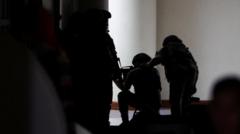
On Wednesday, May 13, 2026, the Philippine Senate building in Manila descended into chaos as gunshots echoed through its corridors, prompting an immediate lockdown. Eyewitnesses reported hearing several shots fired, leading to heightened security measures and the evacuation of staff and visitors. Police commandos, clad in tactical gear, stormed the premises in response to intelligence indicating that a senator, who is wanted by the International Criminal Court (ICC), had been using the building as a refuge.
According to official statements from Philippine law enforcement, the operation was executed swiftly to minimize risks. The senator in question, whose identity remains partially shielded due to ongoing legal proceedings, has been accused by the ICC of serious violations, including potential crimes against humanity linked to past political unrest. The ICC issued an arrest warrant for the senator earlier in the year, escalating tensions between the Philippine government and international judicial bodies.
Background on the Senator and ICC Involvement
The senator at the center of this dramatic event has a controversial history in Philippine politics. Elected in the early 2020s, the individual rose to prominence through advocacy for national sovereignty but faced scrutiny for alleged involvement in extrajudicial killings during a nationwide anti-drug campaign. The ICC, which the Philippines withdrew from in 2019 but later reconsidered under international pressure, reopened investigations into these matters by 2025. This led to the warrant, marking a significant escalation in global efforts to hold officials accountable.
The ICC's pursuit of the senator underscores the court's broader mandate to investigate and prosecute individuals for grave international crimes when national jurisdictions fail to do so. In this case, Philippine authorities had been reluctant to cooperate fully, citing domestic legal processes. Critics argue that this reluctance stems from political alliances and fears of destabilizing the government. The lockdown incident highlights the friction between national autonomy and international law, a theme that has persisted in Philippine foreign policy since the Duterte era.
Detailed Breakdown of the Event
Timeline of events indicates that the standoff began early Wednesday morning when security personnel detected suspicious activity near the senator's office. Gunshots were reportedly fired during an attempted escape or confrontation, though no injuries were immediately confirmed. Police commandos, supported by specialized units, entered the building around 9 a.m. local time, securing key areas and isolating the senator's location. Law enforcement officials later stated that the operation was intelligence-driven, based on tips about the senator's presence despite previous denials.
Witnesses described a scene of panic, with senators and staff members being ushered into safe rooms as alarms blared. Media outlets captured footage of heavily armed officers patrolling the premises, emphasizing the high-stakes nature of the intervention. The Philippine National Police issued a brief statement affirming that the action was lawful and aimed at upholding justice, while calling for calm among the public.
Implications for Philippine Politics and International Relations
This event could have far-reaching implications for the Philippines' internal stability and its relations with the international community. The lockdown may intensify domestic debates over sovereignty, with some viewing the ICC's involvement as an infringement on national affairs. Pro-government supporters have already begun rallying online, arguing that the operation disrupts legislative functions and sets a dangerous precedent for foreign interference.
On the international stage, the incident might strengthen calls for the Philippines to fully re-engage with the ICC, potentially leading to renewed diplomatic pressures from allies like the United States and European nations. Human rights organizations have praised the police action as a step toward accountability, but they caution that any mishandling could erode public trust in the justice system. In the short term, the Senate's operations are expected to be disrupted, with sessions possibly delayed as security protocols are reviewed.
Moreover, this development occurs against a backdrop of economic challenges in 2026, where political instability could deter foreign investment. Analysts suggest that the government's response to this crisis will be closely watched, as it could influence upcoming elections and policy directions. The senator's potential extradition or trial would not only affect individual careers but also reshape the narrative around human rights in Southeast Asia.
Context andBroader Significance
The Philippines has a history of political turmoil, including past instances of senators facing legal challenges amid corruption scandals and human rights abuses. This lockdown adds to that legacy, illustrating the ongoing struggle between power and accountability. As of 2026, the country's relations with the ICC remain strained, exacerbated by global shifts in attitudes toward international justice following various worldwide conflicts.
In conclusion, the Philippine Senate lockdown represents a pivotal moment in the nation's engagement with global legal standards, highlighting the complexities of enforcing international warrants in a sovereign state. Authorities are now focused on resolving the immediate aftermath, ensuring safety, and proceeding with legal processes, as the world watches for the next steps in this unfolding drama.