Pope Clarifies 'Tyrants' Remarks on Trump
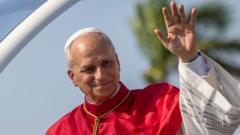
The Pope's Clarification on Recent Remarks
In a development that has drawn international attention, Pope Francis addressed the controversy surrounding his speech on 'tyrants' during a Vatican briefing on April 18, 2026. The pontiff explicitly stated that his words were not intended as a critique of US President Donald Trump, emphasizing that media interpretations had distorted the original context. This clarification comes amid heightened tensions between the Vatican and the White House, marking another chapter in the ongoing dialogue between religious and political spheres.
The incident began when excerpts from the Pope's address at a global ethics conference in Rome were circulated widely. In his speech, Francis discussed the dangers of authoritarianism and the moral responsibilities of leaders, using the term 'tyrants' to describe figures who prioritize power over human dignity. According to reports from the BBC, these remarks were quickly linked to Trump by various news outlets, given his administration's policies on immigration, trade, and international alliances in 2026. The US president responded via social media, calling the Pope's comments 'unfair and politically motivated,' which escalated the situation into a public spat.
Background of the Controversy
To understand the full context, it is essential to revisit the Pope's original speech. Delivered at a symposium on global governance, Francis spoke about the erosion of democratic norms worldwide, citing examples from various regions without naming specific individuals or countries. He argued that 'tyrants in any era seek to divide rather than unite,' a statement rooted in Catholic social teaching and historical references to oppressive regimes. The summary from the primary source indicates that the pontiff's words were meant to be a broad moral exhortation, not a targeted attack.
This is not the first instance of friction between Pope Francis and US political figures. Since his election in 2013, the Pope has been vocal on issues such as climate change, economic inequality, and migration—topics that have often clashed with Trump's policies. In 2026, with Trump's second term facing domestic and international scrutiny, such exchanges highlight the intersection of faith and politics. The Vatican's press office released a statement reinforcing that the Pope's comments were part of a larger discussion on ethical leadership, and any perceived slight was unintentional.
Implications for Vatican-US Relations
The fallout from this misunderstanding could have broader implications for diplomatic relations between the Holy See and the United States. Historically, the Vatican has maintained a delicate balance in its interactions with world leaders, advocating for peace and human rights while avoiding direct confrontations. This episode underscores the challenges of communication in an era of rapid information dissemination, where statements can be amplified and misconstrued across global platforms.
Experts suggest that this incident might prompt a reevaluation of how the Vatican engages with media and political entities. For instance, it could lead to more precise language in papal addresses to prevent misinterpretation, or even foster dialogue between the Vatican and the US State Department to clarify positions on shared concerns like global poverty and conflict resolution. On the US side, Trump's administration may use this as an opportunity to reaffirm its commitment to religious freedom, potentially strengthening ties with conservative Catholic groups domestically. However, if not resolved amicably, it could exacerbate existing divisions, affecting collaborations on issues such as humanitarian aid in conflict zones.
Detailed Breakdown of the Event
- The Initial Speech: Pope Francis delivered his address on April 15, 2026, focusing on ethical leadership in a multipolar world. He used 'tyrants' metaphorically, drawing from historical and biblical references.
- Media Misinterpretation: Within hours, major news outlets linked the remarks to Trump, based on his recent decisions, such as tariffs on European goods and immigration policies, which some critics label as authoritarian.
- Trump's Response: The US president took to X (formerly Twitter) to express his displeasure, stating, 'The Pope should stick to prayers, not politics.' This prompted a swift rebuttal from the Vatican.
- Pope's Clarification: In a follow-up press conference, Francis explained that his words were 'universal in nature' and not aimed at any single leader, urging for unity amid global challenges.
In the context of 2026, this event reflects broader geopolitical tensions, including rising populism and the role of religious institutions in critiquing governance. It serves as a reminder of the power of words in international diplomacy, where a single term can ignite debates spanning continents.
Context Within Global Affairs
As the world navigates complex issues in 2026, such as ongoing economic recovery from previous global disruptions and shifting alliances, the Pope's clarification highlights the need for careful discourse. This incident, while seemingly isolated, fits into a pattern of Vatican efforts to promote dialogue over division. By addressing the misunderstanding head-on, Francis reaffirms his commitment to fostering peace, even as political leaders like Trump continue to shape a volatile international landscape.
Ultimately, this episode underscores the importance of context in public statements, especially in an interconnected world where misinformation can spread rapidly. The Pope's proactive response may help de-escalate tensions and pave the way for future cooperation between the Vatican and the US on pressing global issues.