Ramaswamy Wins Republican Nomination for Ohio Governor
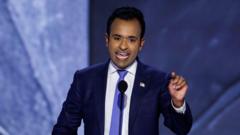
The Rise of Vivek Ramaswamy in Ohio Politics
In a significant development in Ohio's political landscape, entrepreneur and former presidential candidate Vivek Ramaswamy has clinched the Republican nomination for governor, marking a pivotal shift in the state's upcoming electoral battle. Ramaswamy's victory, announced following a competitive primary race, underscores growing voter dissatisfaction with the current administration's handling of public health crises. Throughout his campaign, Ramaswamy focused his platform on critiquing the state's response to the Covid-19 pandemic, which he argued was mismanaged by the Democrat incumbent, leading to economic and social hardships for Ohio residents.
Ramaswamy's path to the nomination was characterized by his relentless campaigning across Ohio's key districts, where he engaged voters on issues ranging from economic recovery to public health policy. His background as a successful biotech entrepreneur, having founded and led companies in the health sector, lent credibility to his criticisms. He repeatedly highlighted what he described as overreaches in state-mandated lockdowns and vaccine mandates, positioning himself as a champion of individual freedoms and fiscal responsibility. This message resonated particularly in rural and suburban areas, where polling indicated strong support for his outsider perspective against more established Republican figures.
The primary race saw Ramaswamy facing off against several contenders, but his strategic emphasis on the lingering effects of the Covid-19 pandemic set him apart. According to campaign reports, he spent much of the contest attacking the Democrat nominee's leadership, pointing to data on job losses and business closures in Ohio as evidence of failed policies. For instance, Ramaswamy cited statistics showing that Ohio's unemployment rate spiked during the peak of the pandemic, a trend he attributed to what he called "ineffective and authoritarian" state measures. His ability to frame these issues in a way that appealed to both conservative and moderate voters was instrumental in securing his win.
Implications for Ohio's Political Future
Ramaswamy's nomination carries substantial implications for Ohio's governance and its role in national politics. As the state grapples with post-pandemic recovery, his victory signals a potential realignment in Republican strategy, emphasizing economic revitalization and a reevaluation of public health protocols. If elected in the general election, Ramaswamy could push for policies that prioritize deregulation and innovation in healthcare, drawing from his professional experience to address ongoing challenges like healthcare access and economic inequality.
Critics, however, warn that his focus on Covid-19 critiques might overlook other pressing issues, such as infrastructure development and education funding, which have been priorities for Ohio voters in recent years. Political analysts suggest that Ramaswamy's campaign rhetoric could polarize the electorate, potentially energizing Democrat turnout in response. The Democrat nominee, who has defended the state's pandemic measures as necessary for public safety, is likely to counter with a platform highlighting Ramaswamy's relative inexperience in elected office and questioning his ability to navigate complex state governance.
In the broader context of 2026 U.S. politics, Ramaswamy's win reflects a national trend of anti-establishment sentiment within the Republican Party. With elections often hinging on perceptions of crisis management, his nomination could influence similar races across the Midwest, where Covid-19 responses remain a flashpoint. Ohio, as a swing state, will be closely watched, with national media and party leaders analyzing how Ramaswamy's nomination affects down-ballot races and federal policy debates.
Context of the Covid-19 Pandemic in Ohio
The Covid-19 pandemic, which began in early 2020, profoundly impacted Ohio, leading to widespread lockdowns, business closures, and a surge in unemployment. The state's response, overseen by the Democrat administration, included mask mandates, vaccination drives, and economic relief packages aimed at mitigating the virus's spread. Ramaswamy's campaign capitalized on public fatigue with these measures, arguing that they stifled economic growth and infringed on personal liberties. He proposed alternatives, such as targeted public health interventions and incentives for private sector innovation, which he claimed would have balanced safety with prosperity.
Supporters of Ramaswamy point to surveys indicating that a majority of Ohio Republicans felt the state's approach was overly restrictive, contributing to his primary success. Conversely, public health experts have cautioned that any rollback of pandemic-era policies could risk future outbreaks, especially as new variants continue to emerge in 2026. This tension between health security and economic freedom is expected to dominate the gubernatorial race, making it a microcosm of national debates on governance in a post-pandemic world.
- Key campaign themes included economic recovery and individual rights.
- Ramaswamy's entrepreneurial background shaped his policy proposals.
- The nomination highlights evolving Republican strategies in swing states.
As Ohio moves forward, Ramaswamy's nomination sets the stage for a heated general election, with voters weighing the lessons of the pandemic against future priorities. His ascent represents not just a personal victory, but a broader commentary on how health crises have reshaped American politics, influencing everything from state policies to national discourse. Ultimately, the outcome of this race could redefine Ohio's approach to governance in an era of uncertainty.